
The Word
Mark 13:24-37
“But in those days, after that suffering,
the sun will be darkened,
and the moon will not give its light,
and the stars will be falling from heaven,
and the powers in the heavens will be shaken.
Then they will see ‘the Son of Man coming in clouds’ with great power and glory. Then he will send out the angels, and gather his elect from the four winds, from the ends of the earth to the ends of heaven.
“From the fig tree learn its lesson: as soon as its branch becomes tender and puts forth its leaves, you know that summer is near. So also, when you see these things taking place, you know that he is near, at the very gates. Truly I tell you, this generation will not pass away until all these things have taken place. Heaven and earth will pass away, but my words will not pass away.
“But about that day or hour no one knows, neither the angels in heaven, nor the Son, but only the Father. Beware, keep alert; for you do not know when the time will come. It is like a man going on a journey, when he leaves home and puts his slaves in charge, each with his work, and commands the doorkeeper to be on the watch. Therefore, keep awake—for you do not know when the master of the house will come, in the evening, or at midnight, or at cockcrow, or at dawn, or else he may find you asleep when he comes suddenly. And what I say to you I say to all: Keep awake.”
Reflect
By Kay Sidahmed
“Macht hoch die Tür, die Tor macht weit” (”Lift high the door, the gates draw wide”) is one of the German advent hymns very dear and near to my heart and soul, and I made sure to teach it to my children as soon as they could somewhat carry a tune. To this day, during advent season we gather around the piano on most mornings for a quick two minutes of song before they head out the door into the business of their school day. “Macht hoch die Tür” is a staple in our advent morning song rotation, as is “People, Look East,” a hymn I was first introduced to at my children’s preschool and have cherished ever since. Both hymns, as different as they may be in setting and tone, are an invitation to mindful preparation and presence: preparing and being present for Love, my personal preferred synonym for God, in all the different shapes, forms, and ways Love may come our way.
Mindfulness has become quite a buzzword in recent years, for good reason in my opinion, as we find ourselves becoming ever more distracted, ungrounded, and disconnected from one another and the purpose of our existence. As a collective, we find ourselves in an epidemic of unease and restlessness. The root cause of this feeling is disconnection from nature and from our essence of being. Buddhist monk Thich Nhat Hanh coined the term interbeing as a reminder of our inextricable connectedness with everyone and everything, a concept that he beautifully brings to light in his many writings. The same concept was and is the cornerstone of the ministry and teachings of Jesus.
It is from this notion of interbeing that I find myself honoring and celebrating the rhythm of the Christian year closely woven together with the rhythm of the solar year, the seasonal changes, and the ways of nature. Since the beginning of time, pre-Christian and Indigenous communities in all corners of the world have been honoring the wheel of the year with traditions and rituals reflecting their respective geographic location and cultural backdrop. They all have in common a deep reverence for the ultimate ways and rhythms of nature and a humble recognition that being mindfully present to and with these rhythms is what sustains us as creatures of nature.
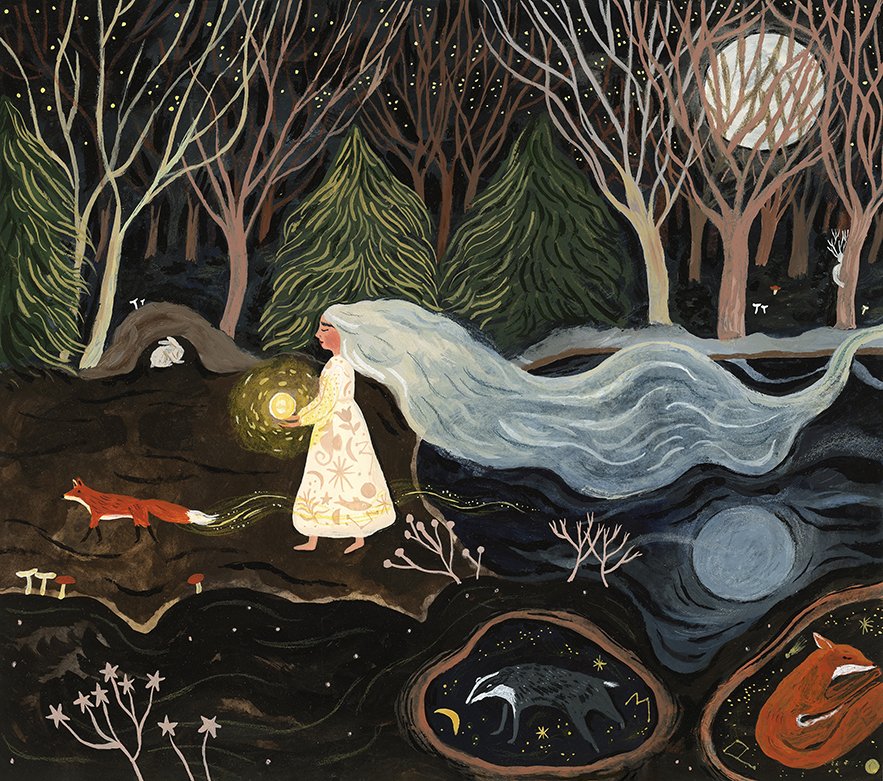
If we make space for this presence and interbeing to enter our lives, we allow ourselves to pause, slow, down, retreat, and rest, just as the seeds below the ground and the hibernating animals do during the winter season. This rest is essential for survival as it allows us to process and gather the resources and nourishment to enter a new cycle, bringing forth new life as the days get longer and warmer. The arc of Advent, Christmas, Candlemas, and Easter reveals its myriad opportunities for connection and healing when we understand it also as an invitation to commune with the earth and nature’s events during the time of the winter solstice through the spring equinox.
Tuning into the darkening and shortening of daylight and following its call to retreat and rest allows us to truly connect with the spirit of Christ and Love, to renew and reseed our commitment to crossing the bridge of separation and othering, and to follow the teachings of Jesus in our lives as we ready ourselves for the emergence of another spring. By accepting this invitation during Advent to pause, light a candle, and gather in quietude, we truly open ourselves and become present to the almost overwhelming magnitude of light that the ever-present Christ has in store for us. Surrendering to this season, with humility to the intimate union of Nature and Love as our guides, keeps us mindfully prepared, present, and connected to receive and bring forth this light of Christ in each other’s lives.
“The Shortest Day” by Susan Cooper
And so the Shortest Day came and the year died
And everywhere down the centuries of the snow-white world
Came people singing, dancing,
To drive the dark away.
They lighted candles in the winter trees;
They hung their homes with evergreen;
They burned beseeching fires all night long
To keep the year alive.
And when the new year’s sunshine blazed awake
They shouted, reveling.
Through all the frosty ages you can hear them
Echoing behind us—listen!
All the long echoes, sing the same delight,
This Shortest Day,
As promise wakens in the sleeping land:
They carol, feast, give thanks,
And dearly love their friends,
And hope for peace.
And now so do we, here, now,
This year and every year.
Welcome, Yule!
Listen
By Dr. Ben Hutchens
Westminster’s Jubilate Ringers provide the music for Advent 2. “People, Look East” first appeared in The Oxford Book of Carols (1928). The lively tune, a traditional French carol BESANÇON, which earlier appeared with the anonymous text, “Shepherds, shake off your drowsy sleep,” provides a festive setting for this wonderful Advent text. The piece opens with music that reminds me of a camel walking through the desert. Composer Linda Lamb achieves this effect by employing malleted ringing: you’ll notice our youth ringers leave the bells on the tables throughout this section. With the aural scene set, we hear the familiar tune in the upper bells on top of the walking camel music. The piece grows in intensity and then fades, ending as it began with the camels softly waking in the desert.
 wpcadvent